
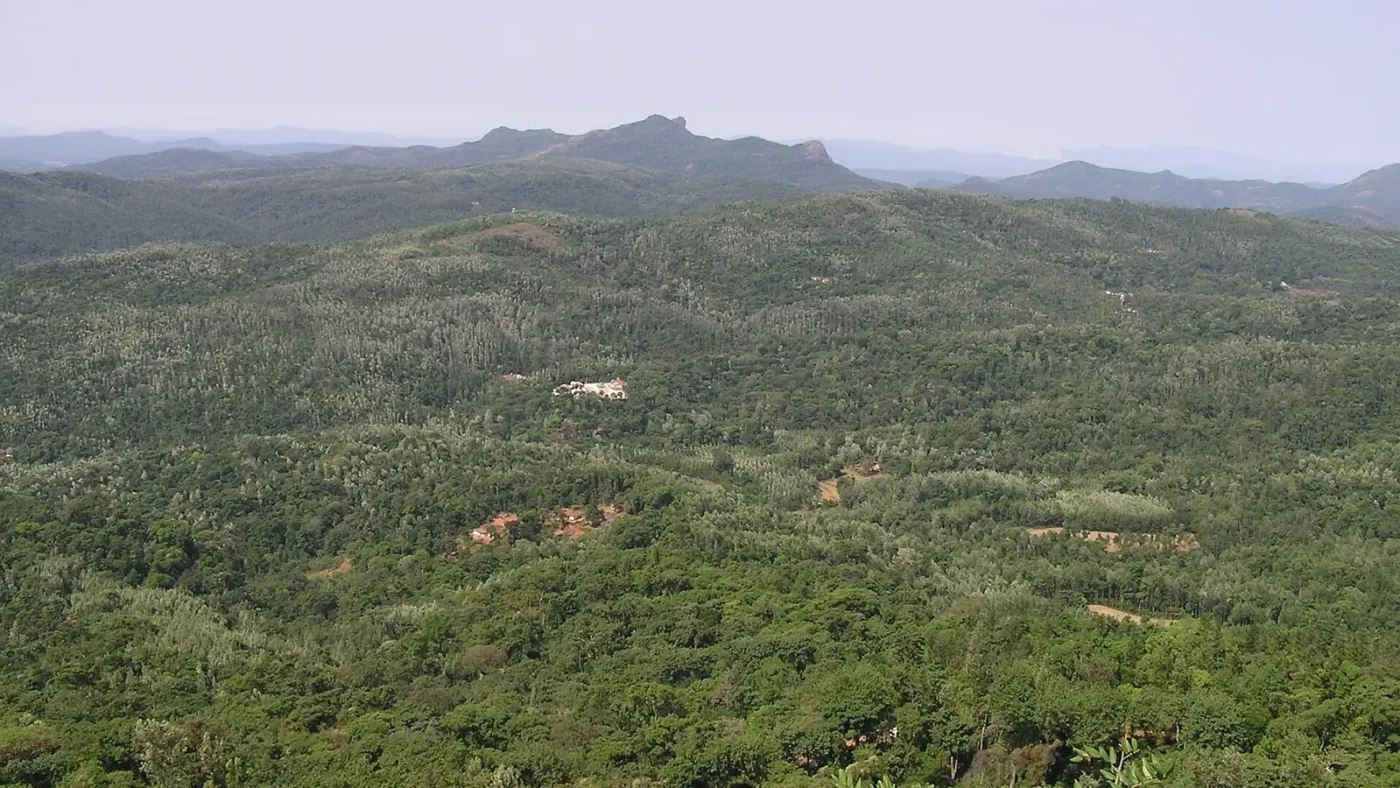
The first sign that the calendar had moved was the blossom. Coffee in the Western Ghats has always flowered after the pre-monsoon showers, and the harvest followed months later with an almost mechanical reliability. In recent seasons, the flowering has come in bursts, and the pickers have arrived to find berries at three different stages on the same estate.
Shade is a strategy
Growers are responding with trees. A shaded estate runs cooler under the canopy, holds moisture in the soil and buffers the plants against a week of unseasonal heat. The shift is not sentimental. Shade also slows ripening, which spreads the harvest over more days and reduces the pressure to find pickers all at once. It also keeps the soil cooler through a dry March, which helps the roots more than a hasty irrigation round.
Water is the harder problem. Borewells have gone deeper, and small tanks that once carried an estate through a dry spell now run low by February. Some planters have built check dams and recharge pits, cheap interventions that depend on the geology of the slope as much as on the money spent.
Pests follow the weather. The white stem borer, long a familiar adversary, has become harder to manage where winters are milder, and the answer – uprooting and replanting with resistant stock – costs several years of income. For a family holding of a few acres, that is a decision measured in school fees.
Prices offer some relief, though not evenly. Good years reward those with the capital to hold stock and the contacts to sell directly. The growers most exposed are the smallest, who sell at the gate and take whatever the day offers. Adaptation, in coffee, is less a technology than a line of credit.